Sunday, 16 February 2014

Lowering cinema to new, shitty levels

Yes! It's the time of year you haven't been waiting for - the results of our annual, "crowdsourced" movie mashup. The huge viral response to our call-out was overwhelming, with almost 9 of you bothering to send something in. Here are the "best worst":  


The Fault in Your Star Wars
Young Luke Skywalker has feelings for fellow terminal patient Leia. But can he resolve his emotional issues with his father before the Empire vaporises the planet with an enormous photon beam?

Rain Man on a Wire
Brave remake of the 1988 classic, in which the stuttering Dustin Hoffman is placed on a tiny tripwire 1,300 feet above Manhattan to improve his self-confidence. With hilarious scenes of idiot savants plummeting to the asphalt in a scream-laden splat

Breaking Bad Santa  
Walter White is a high school drama teacher with months to live – until he realises he can earn millions by secretly dressing as Father Christmas to small groups of children at department stores.  But will the dark and dangerous world of childrens’ nativity performance catch up with him? 

Blue is the Warmest Colour of Money
Astonishing remake of the pool hustling classic, in which Paul Newman and Tom Cruise play 17 year old girls embarking on a lesbian relationship in a shadowy snooker hall filled with broke men. With copious scenes of sweaty, hairy thighs chafing on table felt 

Fight Club Tropicana
The Wham! boys strip off and get down to fisticuffs, organising a violent conspiracy of anarcho-terrorists on top of a luxury speedboat. Featuring mullets, tanned surfers and agit-prop attacks on late capitalism

Driving Miss Jay-Z
Sensitive remake of the 1989 classic, in which rapper Jay-Z dons lipstick and floral gown to play a frail elderly white woman gradually won over by her chauffeur. Featuring non-stop use of new single “F*** Dem Ho’s” by Ludacris throughout 

Kinshasablanca
Nollywood remake of the Bogart classic in which the problems of two people don’t amount to a hill of beans in a Congolese cybercafe

The Teen-Wolf of Wall Street
Young Jordan Belfort is a dashing banker on the rise – but can he stop shedding fur and savaging victims at cocktail parties?


Can YOU write as badly as this? If so send in more suggestions to dkstray@gmail.com!!!

Sunday, 9 February 2014

Me? Ignorant? Rubbish. I’ve read more crap Wikipedia articles than anybody I know

Ah, how wonderful life was before the internet! Remember that? When people read for hours every night, hid their heads away in Encyclopaedias,  and spent hours retreating into dusky, pensive silence; when the women came and went, talking of Michelangelo...

No, me either. It’s tempting to suggest that because knowledge was harder to access before Google, people valued it more, made more effort to get it. But that’s not true, is it? You didn’t write something down every time you didn’t know it and look it up later. Most of the time you just ended up just not knowing stuff. 

This was knowledge before Wikipedia:   

YOU. (In pub). Hornets...
            FRIEND. Yeah.
            YOU. They... Like, nest in trees, don’t they?

A pause. Friend sips pint.

            FRIEND. No... I think they nest in flowers and stuff. Or something.
            YOU. You sure? I thought it was in trees.

Further pause. Friend sips pint.

            FRIEND. No, it’s definitely in flowers. The petals... I think so, anyway.
            YOU. Oh, right.
            FRIEND. I’m pretty sure.
YOU. Are you sure?
            FRIEND. Positive. I think...

Friend sips pint.

 FRIEND. Actually, you should probably look it up, to be honest.
YOU. Yeah. I wish there was somewhere I could do that.
FRIEND. Hmm. Well, you could always look it up in an “encyclopaedia”.

Both laugh.

            YOU. Yeah, I could, couldn’t I...
            FRIEND. I think they have them in libraries and stuff.
            YOU. Do they?
            FRIEND. Yeah. I think so, anyway. Or maybe you’ve got a friend who knows about hornets and stuff.
            YOU. (Thinking about it). Hmm... I can’t really think of one.
            FRIEND. No hornet-knowledgeable friends?
            YOU. Not off the top of my head, to be honest. (Thinks about it again). Besides, it just doesn’t seem really worth it, does it.
FRIEND. How do you mean?
YOU. I mean, going to all that trouble... just to find out something about hornets.
            FRIEND (After a long pause while they consider this). Nah. Not really.
  Silence. 

Friend sips pint.

Sunday, 26 January 2014

“Buy to rent”? Most of us are still struggling with “rent to rent”

When he was searching for rooms a couple of years ago, a friend of mine stumbled on a Gumtree ad which he emailed to me. ‘Hallway with futon,’ it ran. ‘£30PW. Sharing with shoe rack. We don’t go out much after 11pm so you won’t be disturbed.’ They’d even included photos in case you wanted to compare.

It’s difficult for anyone outside the capital to appreciate just how hard it is to live there unless you speculate on gold derivatives for a living. So let me say from experience: housing in London is desperate. People bed down in basements and occupy bathtubs. They sleep on sofas and pay for the privilege. I had a bunch of colleagues from the English school I worked at who lived in a ‘loft warehouse’ at one point, which essentially meant sharing a huge room with a part-time cocaine dealership. There was no toilet and there was a ninety decibel rave on most nights. My Senior Academic Support Officer slept in a hammock.

So why voluntarily inhabit a city where a salmonella-coloured bedsit in zone five will set you back twelve hundred quid a month? Why hand over three month’s wages in return for a pair of flimsy door keys in a room with all the welcoming comfort of a medium sized storm drain?

The answer is so obvious it hardly needs stating: necessity. People in London put up with shared accommodation, punishing rents, and living costs that are rising all the time because that’s where the opportunities are. But all around the country housing is seen as a commodity. We all know about the story of buy to let mortgages – which leapt from 70,000 in the late 1990s to over a million today. But these are only the start. In a recession representing rich pickings for rentiers, the new trend is for “let to buy” – that is, use the rental cash from an older property to finance the mortgage on a new one by chopping it all up into tiny flats. 

But even that’s not the limit: a recent radio documentary describes how the growing trend of “let to let”: in other words, rent out a property, convert and sub-divide, then let that out. It’s a market that’s been boosted by the bedroom tax – the government is keen to encourage a sub-divided society because they represent less in benefit claims.


The result is a lot of rentiers, and a lot of people paying for their lifestyle. The result? Being part of “Generation Rent” isn’t a drop in status - as new research reveals - it’s something to aspire to. Now where was that ad about the hallway...

Sunday, 12 January 2014

Save me from this "Stream of Carelessness"

Is it just me, or are people who post their entire lives to the Internet basically just pricks?

Find out the answer to this complex and nuanced discussion in my article for Litro magazine...

Monday, 9 December 2013

The Christmas Carol doesn’t make me think of the Nativity: it makes me think of Kermit the Frog as Bob Cratchit doing a tap-dance


We all know what Christmas Day is about. Gazing through suburban drizzle at the Tesco Metro sign behind the slate grey rooftops and wondering how long you can last without self-harming? No: it’s about snow, and family, and a roaring fireside, and tradition. Or more accurately it’s about watching snow and family and a roaring fireside and tradition on a massive Toshiba plasma while you attempt to stifle domestic resentment with an evening of Sky One and burpy alcoholism.
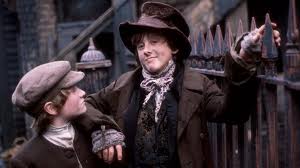
Yes! All up and down the country, the blissful, holy peace of Christmas morning is aflutter with the happy sound of gigantic flat-panels flickering to life and bringing Victorian sideburns and hansom cabs clattering into the living room… It’s Christmas; it’s yet another adaptation of Charles Dickens.
Feeling the festive spirit
I tried reading a book by Charles Dickens a few years back. I advise against it. Dickens wrote over six hundred novels, each of which is twenty thousand pages long, and every single paragraph is couched in impossibly meandering, ornate thickets of narrative foliage. Sometimes it seems to take weeks just to reach the next full stop; the average Dickens sentence is longer than many modern short stories. 
I've never understood the national love-affair with Dickens. The Angelic children and chaste maidens, the saintly paupers, the grasping social climbers – it all just feels so stagey, so hackneyed. Call that a character? I swear I’ve cut out figures from the back of Frosties packets with more psychological depth. wonder if investing all the Dorrits' money in that precarious pyramid scheme is going to turn out well? Who could that mysterious, motherly old crone be who keeps coming to watch like a mother at the gates of the factory that belongs to the “orphaned” Thomas Gradgrind? It’s all about as surprising as a GPS update; so how can something so well-loved feel so howlingly obvious 
Well, there’s a very good reason: TV adaptations. In other words, the reason we feel like we've seen it all before is because… well, because we have seen it all before. If the twentieth century represented a sort of mass move towards literacy, then the twenty first heralds the rise of the post-literate culture, a world that’s moved beyond the book. Media has cycled and recycled the giants of literature into marketable (and profitable) cliché. The result is that we’ve encountered their motifs so frequently that it almost feels underwhelming when you come across them in print.
“What’s Scrooge doing in a book?” was what occurred to me, as I flicked disinterestedly through the Christmas Carol in Waterstones. He actually felt rather out of place there, as if he’d strayed off the screen from an ITV special and accidentally got left behind, presumably wishing he’d stayed in his trailer. Why would anyone read about Fagin when Fagin's currently co-starring with Danny Dyer on the West End? Or bother to churn their way through about nine hundred chapters of the saintly orphaned Nell when they can see the saintly orphaned Nell doing Celebrity Come Dine With Me?
In this sense, the adaptation has become more important than the work it’s based on. It would take a very high minded household to produce a young adult today who came to Dickens afresh; in fact, I’d say it’s almost impossible for someone born in the last few decades to approach the great writers except through adaptations. How many people recall Pride and Prejudice for its sensitive exploration of social propriety and familial bonds, against the ones who just remember Colin Firth jumping into a fishpond? Say ‘Dickens’ to most people and they don’t think of books, they think of fake snow and Bafta-alumni. In my case, A Christmas Carol doesn’t evoke the Nativity: it brings to mind Kermit the Frog tap-dancing to upbeat musical numbers as Bob Cratchit. 
Not that any of this is particularly new of course. Humanity has always spent a significant part of its time rewriting its bygone sages. Shakespeare was ‘reinterpreted’ with rather astonishing results in the nineteenth century by various luminaries including Thomas Bowdler, who cut out all the nasty stuff for a family edition – effectively a pre-television age of editing for the watershed. Poet laureate Nathan Tate went even further and improved King Lear by giving it a much-needed  happy ending, an interpretation which seemed to go down well with Victorian audiences. In our own day the production line of recycled literary classics chugs away so fast that the adaptation is arguably a whole new genre in itself. A recent Wuthering Heights movie played like a cross between a German silent expressionist film and an extended episode of Emmadale; Nicholas Nickleby was combined with social commentary on abuses at elderly care homes. At this rate it can't be long before we see Bleak House presented in three minute story-bites acted out in text-speak by a group of hooded youths standing beneath a flashing T-Mobile sign to a backing track of pounding dubstep. Well, at least it’d give the Rada graduates some new dialogue to learn.
The result is that the Dickens industry acts as a sort of colossal ‘spoiler’ to anything he actually wrote: the staples of classic fiction feel familiar because we’ve already met them elsewhere. A post-literate society doesn't necessarily know more, but it is more knowing. So perhaps that’s why I groaned as I stumbled through yet another Dickens ‘revelation’ that was so obvious to me it might as well have been painted on the side of an articulated lorry and driven through the narrative crushing curiosity shops along the way. ‘You can’t seriously expect me to buy that,’ I gasped to myself: it was just so trite and hackneyed that it felt…
… Well, how shall I put it? For want of a better word, it felt positively Dickensian

Sunday, 10 November 2013

Windowlicking


Book review: Tales from the Mall, Ewan Morrison

Can literature survive the consumer age? Acclaimed Glasweigan author Ewan Morrison answers that question by giving fiction itself a reboot: in Tales from the Mall, observations around the history of shopping are woven together with short stories to create a compelling meditation on contemporary society.

Here the mall – more a generic idea than an actual place – serves as a human cross-section, taking in young and old, locals and newcomers alike. Thus we have the hapless I Dunno Dave, Starbucks junkie, on a bittersweet NLP self-help ‘mission’ to the mall to get a girl’s phone number; we see the jobless advertising exec in her forties attempting to save a disintegrating relationship in a powerful account of ageing in an increasingly youth-driven world, or the former Soviet Union émigré attempting to adjust to life in a western city centred around shopping. Confusion, insecurity and alienation thread their way through all their lives.  

Morrison’s skill lies in his ear for natural dialogue, his human empathy, and his facility for teasing out the fears and conflicted desires that drive human behaviour. A sense of powerlessness permeates the stories, which are sometimes horribly funny – as in the tale of the scabrous, racist ‘Rena the Cleana’ whose bigotry inadvertently saves a suicide case – but often very sad, too, like the pensioner escorted off the mall’s premises for the crime of consuming an unpurchased snack. Perhaps most interesting of all though are the non-fic accounts of consumer manipulation (did you know that shoppers are corralled using techniques originally developed for cattle? Or that the most expensive display space in the complex is the panel opposite the ladies’ shoe shop – ‘windowlicking’ raised to spatial science?)

Tales from the Mall is best when it evokes the terrifyingly ‘liquid’ condition of modern life, where the modern citizen is encouraged to eschew traditional bonds and roles in favour of shopping around for something better. As such, it’s a trenchant comment on the effect that contemporary capitalism has on us all – the ‘mall without walls’ that increasingly serves as a model for all our social relations. The book ends by evoking the mall as junk space, an airless and disembodied limbo, with a character selling spec apartments inside it barricaded against the poverty and riots outside – but for how long?

That, along with much of the rest of the book, serves as an indictment of a society that puts malls at the centre of civic life. If only all novelists were as keen to peel back the brand names and find the stories beneath.

Saturday, 19 October 2013

I don’t care what you say. You’re nothing but a work of fiction designed to give my life meaning


The voices in my head have put me on hold


I recently heard one of those ‘news’ stories about a plan to deploy remote-controlled ‘robo fish’ for marine scouting – something that’s no doubt more eco-friendly than an actual underseas expedition, though we can assume it might lead to some unexpected toothache in larger predators. What’s interesting is the question it begs: are we now witnessing the slow creep towards a natural world populated by machines? Towards an age of Adobe Photosynthesis? Is the age of the iTree finally upon us?
            The last film to explore such a possibility was the clunking Terminator 4, a movie which actually featured its own kind of robo-fish in the form of a mechanised eel thrashing about on a vivisection plate. But that little slice of steampunk raised awkward questions. Why would machines bother to populate the planet with an eel? Even if it could be deployed as a slithery landmine, why wouldn’t they just produce three less eels and one more terminator? Or was Skynet simply attempting to add a bit of variety to life?
            You see the nub of the problem. If we go with the idea that computers suddenly care about marine quotas, all sorts of unlikely implications follow. Cyborgs would, presumably, create the kind of world that cyborgs would enjoy living in. But what would that mean exactly? Are we to picture terminators enjoying a cappuccino? Or a kill-hungry replicant doing a bit of interior decorating, or hanging drapes in the living room? Would a T-800 bother to spraypaint its assault rifle?
            This is where any attempt to imagine an automaton dystopia runs into trouble. It’s all very easy to represent war-torn Armageddon in cyborgia, but what about Sunday afternoons? Would androids spend them sweeping their driveway or installing a new patio barbecue? If you took a dip in the lake in robot world might you encounter a terminator towelling themselves off in the bushes? These might not seem like burning issues, but they question how far we should believe in a fictional world.
These issues were stirred up for me once more while watching the latest series of Peep Show, Channel 4’s sitcom about two men whose lives are soundtracked by their internal thoughts, a textbook example of paranoid schizophrenia played for laughs. What struck me was this: in the universe Mark and Jeremy inhabit, do the other characters walk around with a voiceover in their heads?
A strange question to worry about, you might think, but pondering it upturns a whole wheelie bin's worth of existential ramifications. Are we are fundamentally alone and trapped in an internal voice-over, while everybody around us is merely an elaborately-scripted work of fiction? Consider the minor characters in your own life: the ones who waved you through a gate, or fixed your boiler, or bought you a drink. Real person or just flimsily scripted plot device? Could you really credit a soul to them? And if Peep Show is right, does that mean the very essence of existence may boil down to the insecurities of a repressed sociophobe and a wannabe hipster?
Perhaps this is this what Sartre meant by his theory of authentic being. If you're lucky enough to have voices in your head, hang on to them. Without them you might be the existential equivalent of an uncredited cameo.   
                                                                              @dalelately